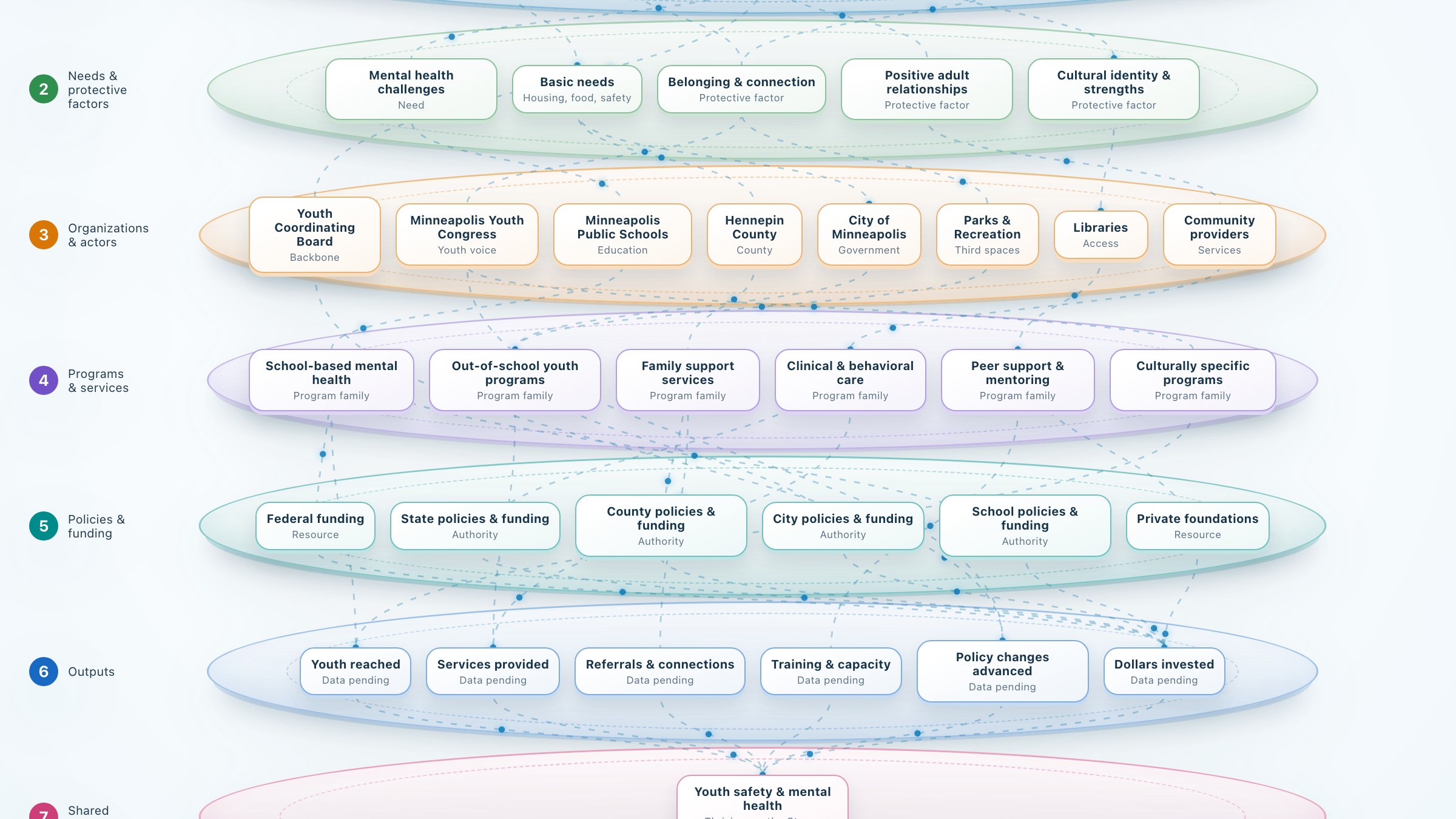
Adolescent mental health is in crisis nationally, and the governments that respond to it in Minneapolis each hold only one piece of the answer. A new policy analysis explains the Youth Coordinating Board's response: the Youth and Families Mental Health Ecosystem, a working map of thirty-seven elements and forty-seven connections showing who does what, how money and programs flow, and where the system still leaves young people behind.
The analysis walks through the four levels of law and policy beneath the model, reads the encouraging 2025 data with care, organizes the twelve named coordination gaps into four families, and weighs what closing them would cost against what it would pay. Its bottom line: Minneapolis has the institutions, the programs, and, for the first time in a decade, the shared data to coordinate youth mental health as one system; what remains is funding the coordination itself, confirming referrals land, and giving every recommendation an owner.
Read the full analysis, synthesized from the author's doctoral research at Claremont Graduate University.